Newsletter
-
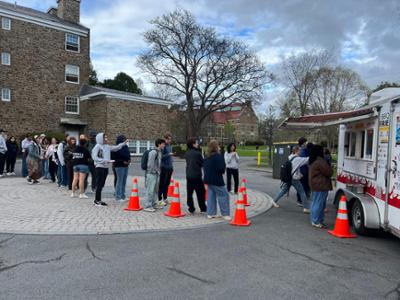
Happy Summer! The DMC celebrated the sunny weather with an end of semester celebration Thursday, April 30th. La Vanguardia (LV), Black and Latine Student Union (BLSU), and Gender and Sexuality Union (GSU) joined forces to bring campus together to celebrate the ending of GSU's Campus Pride Month, the coming of May, the end of the spring semester, and the strong sense of community the DMC ecosystem has fostered throughout the academic year. Students, faculty, and staff gathered to enjoy one another’s company and reflect on a semester full of collaboration and memories. The lively atmosphere made the celebration a fitting way to close out the year before summer break began
-
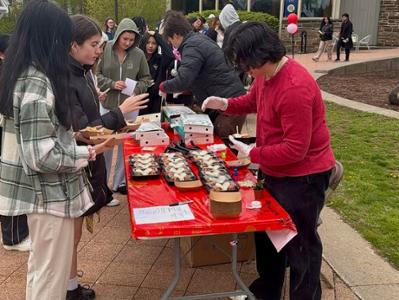
On Saturday, May 2, ASU and Sadove After Dark, in collaboration with the DMC, hosted the Asian Night Market on Sadove Terrace from 5-8 p.m., transforming the space into a vibrant, food-centered celebration of Asian cultures. The event invited the Hamilton community to explore a variety of cuisines through appetizer-style street foods catered from Taj Mahal, Lotus Garden, Red Samurai, Mitsuba, and Pho Vietnam, offering attendees the opportunity to sample dishes across different regional traditions
-
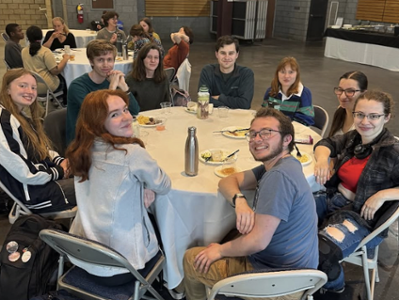
GSU’s Pride Month programming continued on April 22 with Hamilton’s first Pride Dinner, held in The Annex and co-hosted by the Gender & Sexuality Union (GSU) and the Days-Massolo Multicultural Center (DMC). Designed as a space for students, faculty, staff, and their families, the event brought the campus community together for an evening of celebration, reflection, and connection in honor of LGBTQIA+ Pride
-
Gender and Sexuality Union's (GSU) Pride Month and EJAG’s Earth Month programming kicked off on April 6th in the ALCC basement with a thought-provoking event on queer ecology, exploring how environmental ideas have historically shaped understandings of sexuality and identity. The presentation challenged nineteenth-century evolutionary frameworks that cast queerness as “unnatural,” highlighting how these ideas reinforced rigid binaries and broader systems of oppression. It ultimately emphasized queerness as a challenge to fixed categories, opening up more expansive ways of thinking about identity, nature, and belonging.
-
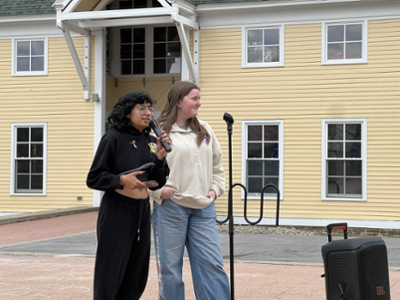
Friday, April 10th was a day of silent protest for Gender and Sexuality Union (GSU) and friends, as students across campus silenced their voices in solidarity. The tradition, first started by students at UVA in 1996 in response to the bullying and harassment of LGBTQIA+ students on campus, has now become a nationally recognized demonstration. Today, LGBTQIA+ students and allies around the country protest the harmful effects of harassment and discrimination of LGBTQIA+ people in schools. Participating in the day of silence is not only crucial not only for LGBTQIA+ folks, but is also a meaningful way for allies to visibly show their support for the queer community.
-
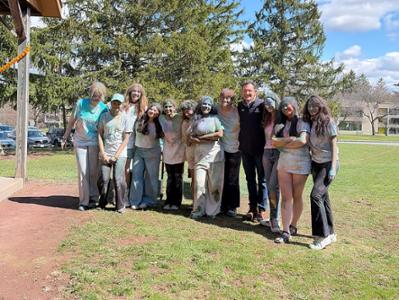
Campus friends gathered on the afternoon of Sunday, April 11th to celebrate Holi as a community. South Asian Student Association (SASA) and Asian Student Union (ASU) joined forces to bring together a fantastic event to Babbitt Pavillion. Holi, widely known as the vibrant Hindu festival of colors, marks the arrival of spring and symbolizes renewal, joy, and the triumph of good over evil.
-
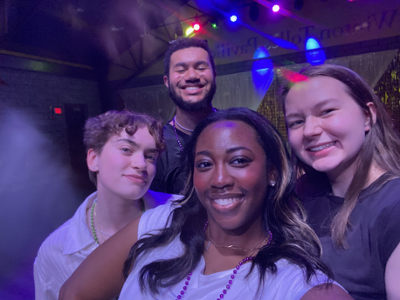
Students poured into the glittering halls of the Annex and Events Barn on Saturday, March 7th at 10pm, drawn by the pulse of blasting music and the shimmer of stunning, hand crafted decorations that transformed the space into something electric. The night held a celebration brought to life by the collective energy and vision of student organizers across all five DMC organizations alongside Sadove Programming to create an unforgettable night of urban vibrancy.
-
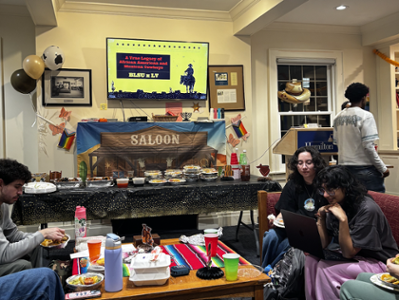
Students engaged with the history of Vaqueros and Black cowboys in conversation and discussion on the evening of Friday, February 26th in the DMC Living Room. Organizers from La Vanguardia (LV) and the Black and Latine Student Union (BLSU) joined forces to educate students on the foundation for the American cowboy, crediting agricultural styles, fashion, civil rights progress, and historic battles to the Mexican and Black cowboys.
-
What does it mean to be a Womanist? Attendees gathered in the DMC on the night of Tuesday, February 24th to discuss the meaning of the Womanist movement and how it diverges from mainstream feminism while exploring the art of zine making in community. Coined by author and activist Alice Walker, the term first appeared in her 1982 publication In Search of Our Mothers Gardens: A Womanist Prose. The movement was made to acknowledge the unique obstacles and challenges faced by Black women.
-
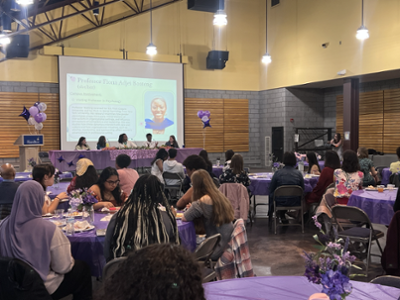
On Wednesday, March 11th at 5:00pm, the Center for Intersectional Feminism (CIF) hosted its Women of Color Banquet at the Annex, bringing together students, faculty, and staff for an evening centered on celebration, reflection, and community. The event created a space to honor the voices, experiences, and contributions of women of color on Hamilton campus, inviting attendees to engage in meaningful conversation.
Contact
Office / Department Name
Days-Massolo Multicultural Center
Contact Name
Koboul E. Mansour, Ph.D
Director, Days-Massolo Multicultural Center
