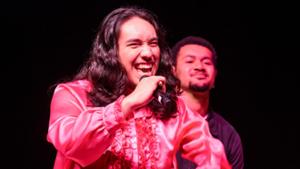
Hamilton Writers
Hamilton has produced novelists with tens of millions of readers, Pulitzer Prize winners, Emmy-winning screenwriters, and journalists shaping national conversations — all shaped by more than two centuries of exceptional writing education.


Sarah J. Maas
Class of 2008
Maas started writing stories at Hamilton and never stopped. Today she’s the author of more than 16 books across three internationally bestselling series — Throne of Glass, A Court of Thorns and Roses, and Crescent City — with over 75 million copies sold and translations in 40 languages.

Roz Chast
Kirkland Class of 1975
A staff cartoonist for The New Yorker since 1978, Chast has published more than 1,000 cartoons in the magazine, with New Yorker editor David Remnick calling her “the magazine’s only certifiable genius.” Her memoir Can’t We Talk About Something More Pleasant? won a National Book Critics Circle Award and the Kirkus Prize. In 2024, she was awarded a National Humanities Medal by President Biden.

Kathleen McGrory
Class of 2005
McGrory is an editor with the New York Times' Local Investigations Fellowship program. In 2021, as deputy editor for investigations at the Tampa Bay Times, she won a Pulitzer Prize in Local Reporting for exposing how a politically connected Florida sheriff built a secretive intelligence operation that harassed residents and used school records to profile children.

Paul Lieberstein
Class of 1989
A screenwriter, director, and producer, Lieberstein is best known for his work on The Office — where he also played human resources director Toby Flenderson — earning an Emmy Award for Outstanding Comedy Series and a Writers Guild of America Award. His credits include King of the Hill, The Drew Carey Show, and Lucky Hank, the AMC series he wrote and served as showrunner.

Richard Nelson
Class of 1972
Nelson wrote the book for the musical James Joyce's The Dead (Tony Award, 2000) and the 1988 Broadway production of Chess. Among his many other works are Goodnight Children Everywhere (Olivier Award), The Vienna Notes (Obie Award), and Principia Scriptoriae (London Time Out Award). A recipient of the PEN/Laura Pels Master Playwright Award and an honorary artistic associate of the Royal Shakespeare Company, he remains one of the most active playwrights of his generation.

Elaine Weiss
Kirkland Class of 1973
A journalist and narrative historian, Weiss has contributed to The Atlantic, Harper's, The New York Times, and The Christian Science Monitor, as well as documentaries for NPR. Her book The Woman's Hour: The Great Fight to Win the Vote received a Goodreads Choice Award and the American Bar Association's Silver Gavel Award. Her most recent book, Spell Freedom (2025), chronicles the underground schools that fueled the Civil Rights Movement and was longlisted for the Carnegie Medal for Excellence in Nonfiction.

Terry Brooks
Class of 1966
Brooks was inspired to write fantasy at Hamilton when he was given a copy of The Lord of the Rings. In 1977, his novel The Sword of Shannara became the first work of fiction ever to appear on The New York Times trade paperback bestseller list — launching a career that has spanned nearly 50 years and 40+ books. George Lucas recruited him to write the novelization of Star Wars: The Phantom Menace, which hit No. 1 on The New York Times bestseller list. He retired in 2025, having cemented his place as one of the defining voices in American fantasy.

Kamila Shamsie
Class of 1994
Shamsie’s first novel, In the City by the Sea, evolved from a short story she wrote for a class at Hamilton — the beginning of a career that has earned her international acclaim. Her second book, Salt and Saffron, earned her a place on Orange’s list of “21 Writers for the 21st Century.” Her seventh novel, Home Fire, won the Women’s Prize for Fiction, and her most recent, Best of Friends, was published in 2022.

Annie Hartnett
Class of 2008
Hartnett is the author of three novels, including Rabbit Cake, one of Kirkus Reviews' Best Books of 2017, and Unlikely Animals. Her most recent novel, The Road to Tender Hearts (2025), is a national bestseller and winner of the 2025 New England Book Award.

Mark Sullivan
Class of 1980
Sullivan is the author of more than 20 novels, including the #1 New York Times bestselling Private series, which he writes with James Patterson, and Beneath a Scarlet Sky, a USA Today and Washington Post bestseller. His most recent novel, All the Glimmering Stars, is a work of historical fiction inspired by the child soldier crisis in 1990s Uganda.

Olivia Wolfgang-Smith
Class of 2011
Wolfgang-Smith's debut novel, Glassworks, was longlisted for the Center for Fiction and VCU Cabell First Novel Prizes and named a Best Book of the Year by NPR, Apple, and Good Housekeeping. Her second novel, Mutual Interest (Bloomsbury, 2025), set in turn-of-the-century New York, has drawn comparisons to Edith Wharton and Henry James.

Charles Warzel
Class of 2010
A staff writer at The Atlantic, Warzel covers technology, media, and politics through his newsletter Galaxy Brain. Previously a writer-at-large for The New York Times Opinion page, he was a finalist for the 2020 Livingston Award for National Reporting for “One Nation Tracked,” a seven-part investigative series on smartphone location tracking. He is also co-author of the book Out of Office: Unlocking the Power and Potential of Hybrid Work.

Evan Smith
Class of 1987
As editor-in-chief of Texas Monthly, Smith earned 14 nominations for the National Magazine Award, the magazine industry’s equivalent of the Pulitzer Prize. He co-founded The Texas Tribune and served as its CEO from 2009 to 2022. He is a senior adviser at Emerson Collective and, since 2026, Managing Director for Events at The Atlantic.
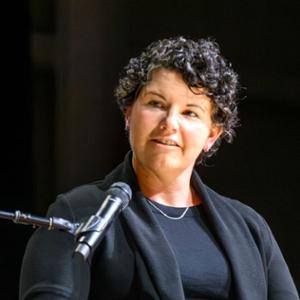
Lauren Reynolds Nelson
Class of 2002
After getting her start as sports editor at The Spectator, Reynolds Nelson built a career at ESPN spanning more than two decades. She currently serves as Vice President of the Universal Coverage Group, overseeing the reporters, analysts, editors, and bureau producers responsible for daily content creation and newsgathering across all professional leagues, college sports, combat sports, and premium content.

Steve Wulf
Class of 1972
A veteran sportswriter, Wulf spent decades at Sports Illustrated and ESPN, where he served as executive editor of ESPN The Magazine. He is the co-author of Baseball Anecdotes and I Was Right on Time with Buck O’Neil, and served as a consultant on Ken Burns' landmark documentary series Baseball.

Greg Thomas
Class of 1985
A writer, editor, and cultural producer, Thomas has contributed to The Village Voice, The Guardian, New Republic, and the New York Daily News, where he was the jazz columnist. He is founder and CEO of the Jazz Leadership Project, which uses jazz principles — shared leadership, ensemble mindset, and collective improvisation — to develop leadership and team culture in organizations.
Henry Allen
Class of 1963
A feature writer and editor at The Washington Post for decades, Allen received the 2000 Pulitzer Prize for Criticism for "his fresh and authoritative writing on photography." A novelist, essayist, and poet, his books include What It Felt Like: Living in the American Century and Where We Lived: Essays on Places.

Stuart Kestenbaum
Class of 1973
The author of six collections of poetry, Kestenbaum served as Maine’s Poet Laureate from 2016 to 2021 and spent more than 25 years as director of the Haystack Mountain School of Crafts, where he established innovative programs combining craft and writing.

Peter Meinke
Class of 1955
A poet and short story writer, Meinke has published more than 18 books, including The Piano Tuner, which won the Flannery O'Connor Award for Short Fiction, and Lucky Bones. A two-time National Endowment for the Arts fellow and recipient of the O. Henry Award, he served as poet laureate of Florida.

Kyandreia Jones
Class of 2019
Jones writes history-driven books for young readers, including three titles in the Choose Your Own Adventure series. Her SPIES books put readers in the shoes of real-life heroes — Mary Bowser, a Civil War spy, and James Armistead Lafayette, who helped Revolutionary War forces defeat the British. Her third title, The Ghost on the Mountain, is inspired by her own Haitian heritage.

Peter Cameron
Class of 1982
The author of several novels and short story collections, Cameron has earned praise for his elegant prose and characters drawn with “painterly precision.” His novel Someday This Pain Will Be Useful to You is being adapted for film by Martin Scorsese, starring Jennifer Lawrence and Leonardo DiCaprio.
Barrett Seaman
Class of 1967
A correspondent for Time magazine for more than 30 years, Seaman covered five U.S. and international bureaus, including a stint as senior White House correspondent during the Reagan administration. He co-authored Going For Broke: The Chrysler Story and wrote Binge: What Your College Student Won't Tell You, drawn from two years spent living on 12 college campuses.

Steve Orlando
Class of 2008
Orlando is a prolific comic book writer whose credits span DC Comics and Marvel. At DC he has written Batman, Wonder Woman, Martian Manhunter, and two Midnighter series nominated for a GLAAD Media Award. He has since expanded to Marvel, where his recent work includes Sorcerer Supreme, featuring the Scarlet Witch, and the upcoming X-Men: Outback.

Rachel Dickinson
Kirkland Class of 1978
A travel and history writer and author of seven books, Dickinson’s work has appeared in The Atlantic, Audubon, National Geographic Traveler, Smithsonian, Yankee, and The Saturday Evening Post, among others. She is a two-time winner of the Travel Classics Writing Award.

Lauren Magaziner
Class of 2012
Magaziner writes humorous and action-packed books for young readers, including the series “Case Closed,” “The Mythics,” and her most recent series, “The Incorruptibles.” She wrote her debut novel, The Only Thing Worse Than Witches, while studying abroad as a junior at Hamilton.

Preeta Samarasan
Class of 1998
Samarasan has written two acclaimed novels set against key turning points in the history of her native Malaysia. Evening Is the Whole Day, described as "exuberantly lyrical and masterfully constructed," earned the Avery and Jule Hopwood Novel Award. Her second novel, Tale of the Dreamer's Son, was published in 2022.

Olivia Waxman
Class of 2011
A staff writer at TIME, Waxman covers history and its parallels to current events, writing across the magazine's Nation, Politics, Entertainment, and Health sections. She is an honors graduate of Columbia Journalism School.

Stephen Krensky
Class of 1975
Krensky is the author of more than 130 fiction and nonfiction books for children, ranging from picture books and easy readers to novels, poetry, and folklore. His titles include the bestselling How Santa Got His Job (an ALA Notable Book), The Dragon Circle, and Big Bad Wolves at School.
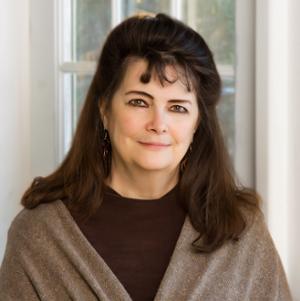
Nancy Avery Dafoe
Kirkland Class of 1974
Dafoe has published 15 books ranging from mystery novels to poetry and hybrid memoir. Her novel Socrates is Dead Again won GOLD in the 2023 Human Relations Indie Book Awards, and her most recent novel, Yet in the Land of the Living, continues her exploration of loss, memory, and resilience.
“You should have gone to Hamilton. You would have learned to write.”

We often hear stories about how the writing skills alumni developed on College Hill set them apart in graduate school or in their professions. Here’s one such story that has gone down in Hamilton lore …
The setting is a large hall at Georgetown University Law Center. A second-year student, and Hamilton alumna, sits among a class of law students nervously awaiting the return of their first paper of the semester. The professor is Samuel Dash, former special counsel to the Senate Watergate Committee during the Nixon era.
Dash stands at the front of the room, randomly calling numbers assigned to each student. “Number 27?” Student 27 raises his hand, the professor hands over the paper asking, “Where did you go to college?” The student replies, and Dash moves on. This continues with each student receiving a paper and answering, “Harvard, Penn, Princeton …”
Finally, when all but one paper is distributed, Dash calls out, “Number 18?” The Hamilton alumna raises her hand. “Where did you go to college?” “Hamilton,” she replies. “Okay, the rest of you,” Dash announces, “you should have gone to Hamilton. You would have learned to write.”
But there’s more …
As the story was passed down over the past 25+ years, the name of the student somehow didn’t pass with it. But thanks to some recent sleuthing courtesy of the College’s Information Services staff, we tracked down the Hamilton/Georgetown Law writer extraordinaire. It is none other than Sarah Kanwit Morehead ’95, now the career law clerk to a federal judge in the Western District of Washington, where she conducts legal research and analysis, draft orders, and assists the judge in courtroom proceedings.
“The job requires extensive writing every day,” she says. “I am grateful to Hamilton for its strong writing curriculum that definitely helped me hone my communications skills. Strong, clear writing is important in so many professions.”


“It’s not just about making an argument; it’s about figuring out what your argument is and making a better argument through writing.


Hamilton faculty members and Writing Center tutors have developed a variety of writing resources that cover everything from basic skills to discipline-specific stylistic advice. Check out insider tips from literature majors or learn how to write about race, ethnicity, socioeconomic status, disability, gender, sexuality, and more.
Seven Rules of Writing
Professors at Hamilton work closely with students to improve their writing. It’s a process that combines instruction, collaboration, and practice. And while accuracy in style and grammar is just one element of what makes good writing, the Writing Center offers these handy tips.
In most instances, put the verb in the active voice rather than in the passive voice.
My first trip to Clinton is one I will always remember.
I will always remember my first trip to Clinton.
An independent clause has a subject and a verb and can stand alone as a sentence.
The punctuation of compound sentences varies depending upon how you connect the clauses.
Concise writing is key to clear communication. Wordiness obscures your ideas and frustrates your reader.
Unnecessary Phrases/Clauses, such as: The reason why is that, in spite of the fact that, due to the fact that, in the event that, because of the fact that, by means of
Apostrophes may indicate possession or mark omitted letters in contractions.
Misplaced and dangling modifiers create illogical, even comical, sentences. We confuse our readers if we fail to connect modifiers (words that describe or limit other words) to the words they modify.
Pronouns, such as “he, she, him, they,” are useful as substitutes for nouns, but a poorly chosen pronoun can obscure the meaning of a sentence.
Unclear Pronoun Reference
Vague Subject Pronoun
Agreement Error
Here are a few common errors found in writing. Don’t let them happen to you.
AFFECT VS. EFFECT
ENTITLED VS. TITLED
FARTHER VS. FURTHER
LESS VS. FEWER
THAN VS. THEN
“Being in medicine, you think that science is the most important part of your education, but through the course of my career, being able to write well and be a reasonably good public speaker have proven to be tremendously important.