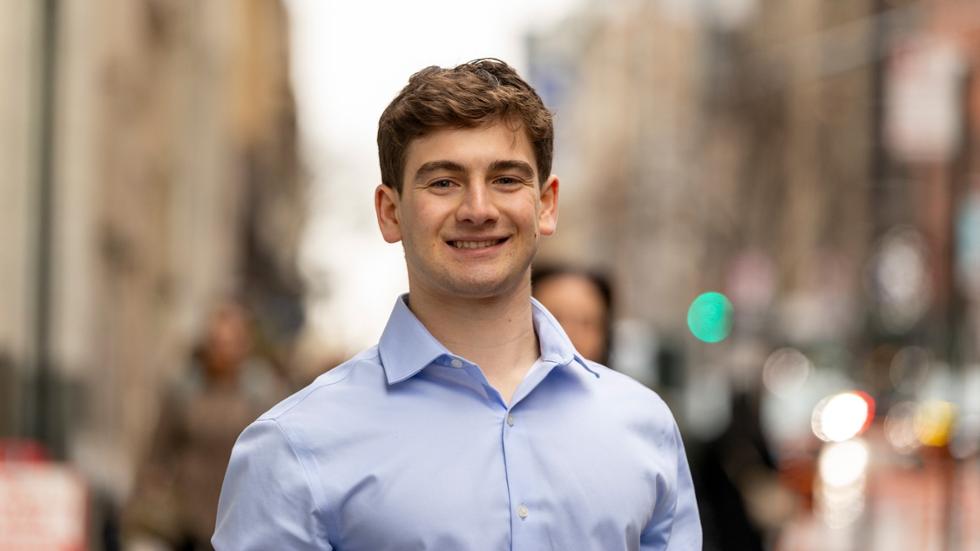
Shulman is a passionate believer in the transformative potential of a liberal arts education and its transferability to entrepreneurship. Through Trivium, he is building a pathway for NESCAC students to break into artificial intelligence, prediction markets, consumer technology, and a host of other up-and-coming enterprises.
Shulman is used to working his way up. In high school, he operated a landscaping business that drew more than 75 customers. At Hamilton, he joined the men’s squash team and was elected captain in his junior and senior years. He has also been involved in the Chabad student group, of which he is now president.
Bolstering Shulman is the support of his mentors and the flexibility of his academics, which have taken him on a path that has not always seemed linear. He entered Hamilton intending to concentrate in economics but pivoted to a major in history with minors in environmental studies and government.
Three courses with Douglas Ambrose, the Christian A. Johnson Excellence in Teaching Professor of History, spurred Shulman’s interest in Jewish Confederate soldiers and their disproportionate influence on the Confederacy. He pursued research in that area for his senior thesis. At the same time, casual exchanges with professors, peers, and recent alumni — including Luke Hayes ’25, William Rice ’24, and Gabrielle Nakkab ’25 — reaffirmed to Shulman the unique strength of the Hamilton community.
“We’re a catalyst for entrepreneurs who have been traditionally overlooked by Silicon Valley but have the tools to be disproportionately successful.”
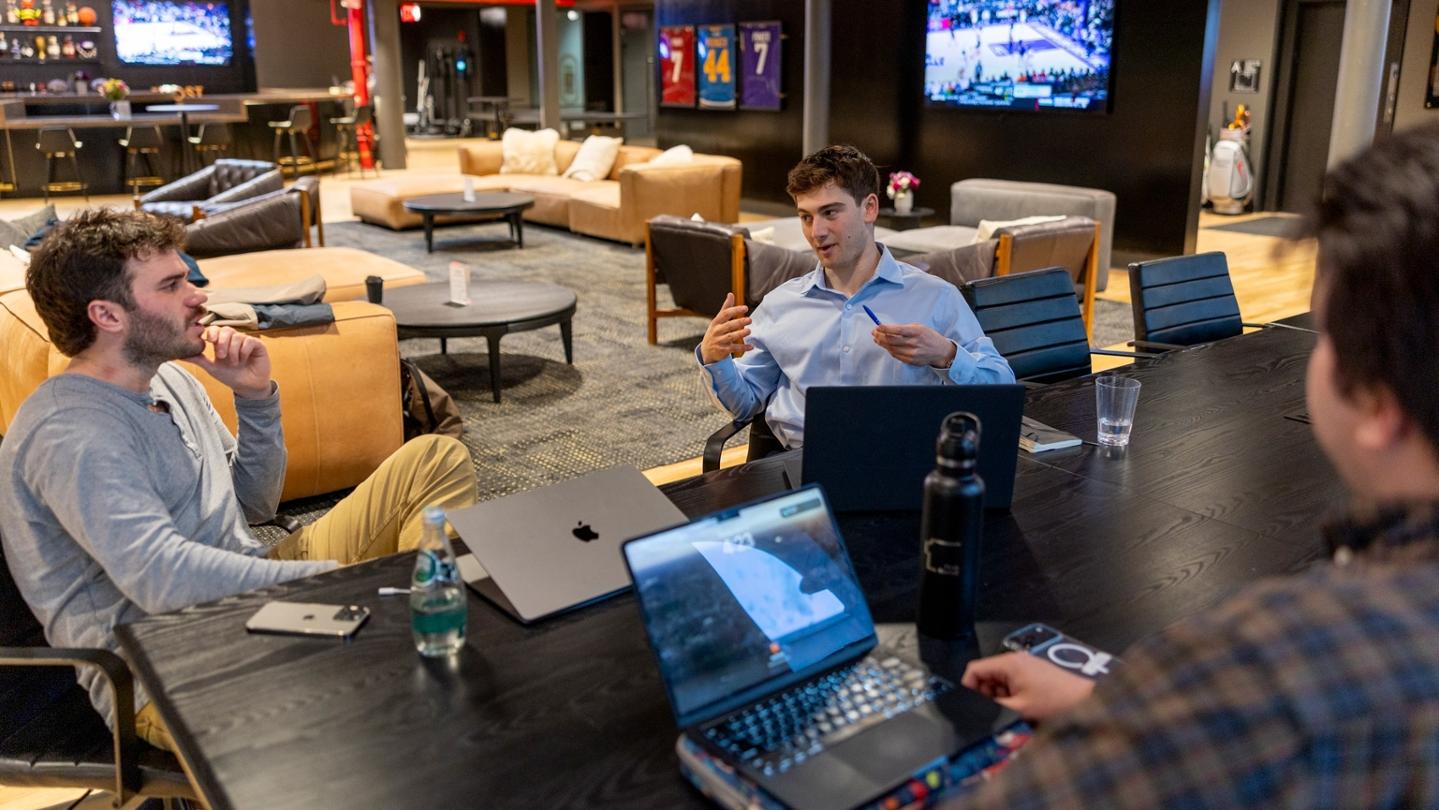
Shulman is building out that community with Trivium Venture Network. The marketspace business links start-up founders with liberal arts backgrounds with investors, many of whom serve as mentor figures as well. “A liberal arts campus is the best place to foster great ideas ... but students rarely give it a shot until after they graduate,” he explained. “We’re a catalyst for entrepreneurs who have been traditionally overlooked by Silicon Valley but have the tools to be disproportionately successful.”
According to Shulman, start-ups with a NESCAC graduate on their team are 2.1 times more likely to raise a Series A round, an important step for start-ups to finance their growth and development. Trivium began with one angel investor, then three, and has since snowballed into an estimated 300+ conversations with liberal arts-affiliated founders and early-stage investors.
Shulman’s motto? “Under-promising and over-delivering.” He has already invested $250,000 through special purpose vehicles (SPV) in two NESCAC-based start-ups. Looking ahead, he aims to complete seven more deals by the end of the year, in addition to enhancing Trivium’s weekly newsletter, raising funds for self-directed investments, and road tripping around the country in an RV.
“I couldn’t see myself doing something that everyone else was doing,” he said, and that trend is sure to continue.
Posted April 29, 2026