Bookshelf
Alumni and faculty members who would like to have their books considered for this listing should contact Stacey Himmelberger, editor of Hamilton magazine. This list, which dates back to 2018, is updated periodically with books appearing alphabetically on the date of entry.
-

(Wordwooze Publishing, 2025).
Peter Kovacs, an adjunct professor at an urban community college, explores the concept of “home” with his students while, outside the classroom, he manages relationships with a strange neighbor, his ex-wife, a newly adopted cat, and a fellow professor. When a newborn baby is found abandoned in a trash can in an alley near the college, he finds himself compelled to find out what happened. Meanwhile, in a parallel narrative that eventually intersects with Peter’s, a young Japanese boy drawn to photography strives to find meaning to his own life.
Topic -

(Atmosphere Press, 2025).
Wistful. Nostalgic. Comforting. These are just a few of the words readers use to describe Cater’s debut short story collection, which spans the 1950s to the 2000s. He brings to life his “adventures in New Jersey, escapades in Alabama, summers in Wellfleet on Cape Cod, business in the South, career mistakes in Boston, trips to Aruba, London, Vietnam, and a second home in Barbados.”
Topic -
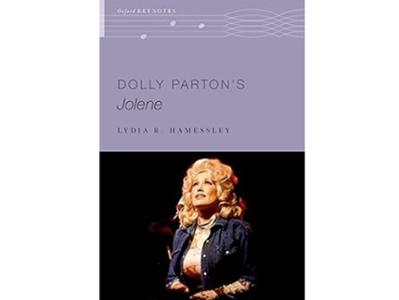
(Oxford University Press, 2025).
This popular hit tune by Dolly Parton is the subject of Hamessley’s second book focused on the singer, songwriter, actress, philanthropist, and businesswoman’s music and song-writing. It follows Unlikely Angel: The Songs of Dolly Parton (2020), which provided a comprehensive look at the process, influences, and themes that shaped Parton’s songwriting. According to the publisher’s website, this new book provides “a deep dive into ‘Jolene,’ one of Dolly Parton’s most well-known songs.”
Topic -
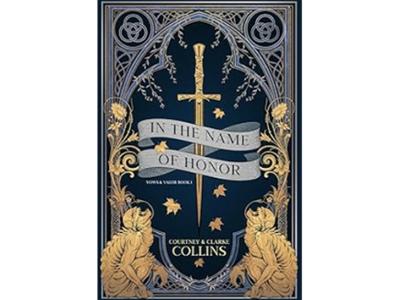
(Shadow Spark Press, 2025).
Fans of epic fantasy mixed with romance will devour this thrilling new adventure written by the husband-and-wife team of Collins and Collins.
Topic -

(PLI Press, 2025).
This latest edition of a volume first published in 2016 covers the ownership, financing, documentation, taxation, and accounting for net leases and sale-leasebacks, with a focus on areas where the treatment of net leases and sale-leasebacks differs from the treatment of other forms of real estate investment.
Topic -
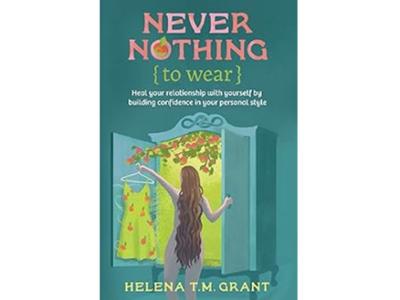
(Reverse Pathology Media, 2025).
For anyone who has stood in front of their closet, hands on hips, pondering for the umpteenth time what to wear, this book is for you! One reviewer noted that it “does a brilliant job of stating a collective problem in a way that’s accessible to all women without over-indexing on a certain female archetype. The crushingly raw opening pages will speak to and soften all readers, while the timing of pithy inflection is perfect. Grant unpacks a uniquely 21st-century problem — why we feel like we never have anything to wear — in a way that gets at the heart of gendered questions about modernity, abundance, wellbeing, and self-worth. The reader walks away with a framework for finding meaning in seemingly ordinary vulnerabilities and finds herself less lonely in the process.”
Topic -
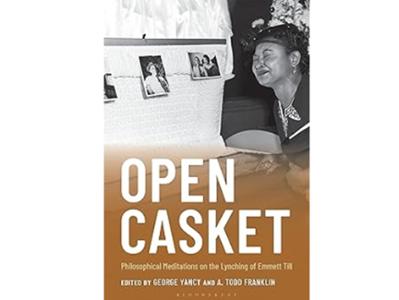
(Bloomsbury, 2025).
Marking 70 years since the murder of Emmett Till, this volume co-edited with George Yancy, the Samuel Candler Dobbs Professor of Philosophy at Emory University, is a collection of essays by a wide range of Black scholars who take up Till’s casket as a focal point for reflection on anti-Black racism, past and present, in hopes of rallying people against it as we turn toward the future.
Topic -

(De Gruyter, 2025).
“Humanity is in a period of dramatic change - the risk of near-time impact from environmental degradation; political and socioeconomic challenges exacerbated by the manipulation of social media; and an interconnected, networked world where Artificial Intelligence and widespread computational science offer both peril and promise.”
Topic -
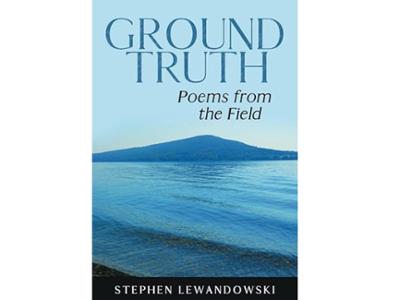
(Cayuga Lake Books, 2024).
This volume of poems represents the 16th collection in a writing career spanning five decades. As a fellow poet noted, “Here is a sure, durable and unsentimental chorus of poems to love and landscape. When Lewandowski describes the hills of the Finger Lakes region of New York, ‘there are/ hills upon hills walking/ the day away in the woods’ he may be describing himself. Take this book by the hand.”
Topic -

(Routledge, 2025).
Along with co-editors Don Waldman of Colgate University and Qi Ge ’06, Jensen’s former student and now an associate professor of economics at Vassar College, this latest edition of the book first published in 1998 is described by the publisher as blending “a rigorous theoretical introduction to industrial organization with empirical evidence, real-world applications, and case studies.” This, along with the range of theoretical and applied problems and exercises it provides, makes it “one of the leading undergraduate texts on industrial organization,” according to the description.
Topic
Contact
Stacey Himmelberger
Editor of Hamilton magazine
