Bookshelf
Alumni and faculty members who would like to have their books considered for this listing should contact Stacey Himmelberger, editor of Hamilton magazine. This list, which dates back to 2018, is updated periodically with books appearing alphabetically on the date of entry.
Showing articles tagged with Faculty Book –
-
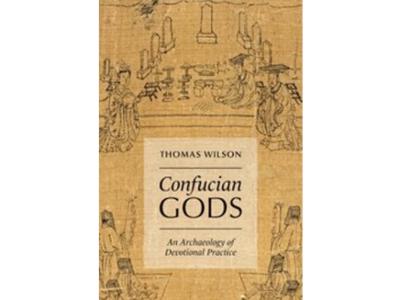
(Oxford University Press, 2026).
This book offers an intellectual history of Confucian conceptions of the gods found in the classics and feasted by the imperial court until the early 20th century. The author examines court debates surrounding these canonical gods and the devotional rites to feast them at imperial altars and temples during the Tang (618-907), Song (960-1279), and Ming (1368-1644) dynasties.
Topic -
(Ediciones MYL, 2026).
(Literature and Mining in the Andes: A Reading of Extractivist Imaginaries)
This book explores the literary traditions of Bolivia and Peru, contextualizing how mining has shaped regional identities, labor, and landscapes from colonial times to the present. Based on close readings of literary and journalistic productions, the author explores how elite intellectuals of the late 19th century portrayed “extractivism” alongside their visions for a modern nation, specifically how it should be integrated into and benefit from an international market constantly hungry for the gold, silver, and other minerals of the Andean region.
Topic -

(St. Martin’s Press, 2025).
In 2020, Congress voted to rename nine military installations that honored Confederate leaders who had waged war in the name of maintaining a slave republic. Five years later, the Trump administration reversed course, reinstating the original names. This book by two members of the Naming Commission tells the stories of the 10 American heroes whose names they had selected.
Topic -

(Cambridge University Press, 2025).
According to the publisher, “Beyond Coercion offers a new perspective on mechanisms of social control practiced by authoritarian regimes. Focusing on the Chinese state, Alexsia T. Chan presents an original theory and concept of political atomization, which explains how the state maintains social control and entrenches structural inequality.
Topic -
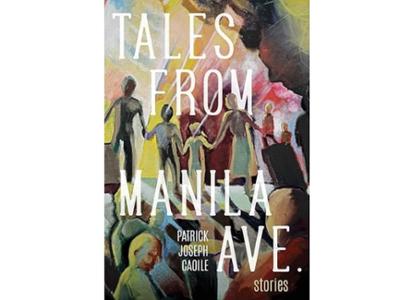
(Sundress Publications, 2025).
The publisher provides this description: “Tales from Manila Ave. traces the joys and struggles of Filipino immigrants as they navigate life and ponder identity outside their motherland. Through touching reflections on community and memory, Patrick Joseph Caoile’s debut collection takes an honest yet playful look into the intricacies of longing and belonging. Tenants gather to swap meals and stories, workers strive to prove their worth, sons and daughters revisit their relationships with faith, patriotism, and their own parents. These connections span generations, and in crossing both time and distance, urge us to observe what is lost or changed in the translation.
Topic -

(Columbia University Press, 2025).
The arrival of the Trump administration marked a sharp shift in how the federal government viewed its own role. Promising to cut red tape and rethink Washington’s bureaucracy, the president’s agenda tested long-standing norms of democratic governance. But what happens to civil servants when political leadership seeks to redefine the government they serve? How do they balance their professional obligations with shifting visions of democracy and public trust?
Topic -
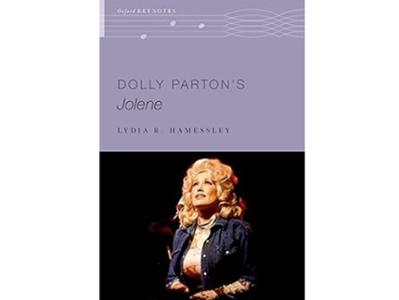
(Oxford University Press, 2025).
This popular hit tune by Dolly Parton is the subject of Hamessley’s second book focused on the singer, songwriter, actress, philanthropist, and businesswoman’s music and song-writing. It follows Unlikely Angel: The Songs of Dolly Parton (2020), which provided a comprehensive look at the process, influences, and themes that shaped Parton’s songwriting. According to the publisher’s website, this new book provides “a deep dive into ‘Jolene,’ one of Dolly Parton’s most well-known songs.”
Topic -
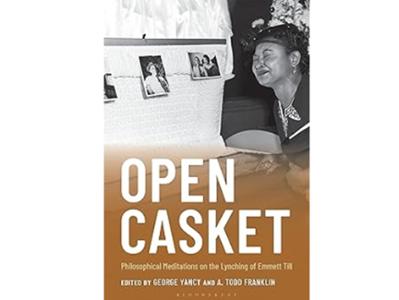
(Bloomsbury, 2025).
Marking 70 years since the murder of Emmett Till, this volume co-edited with George Yancy, the Samuel Candler Dobbs Professor of Philosophy at Emory University, is a collection of essays by a wide range of Black scholars who take up Till’s casket as a focal point for reflection on anti-Black racism, past and present, in hopes of rallying people against it as we turn toward the future.
Topic -

(Routledge, 2025).
Along with co-editors Don Waldman of Colgate University and Qi Ge ’06, Jensen’s former student and now an associate professor of economics at Vassar College, this latest edition of the book first published in 1998 is described by the publisher as blending “a rigorous theoretical introduction to industrial organization with empirical evidence, real-world applications, and case studies.” This, along with the range of theoretical and applied problems and exercises it provides, makes it “one of the leading undergraduate texts on industrial organization,” according to the description.
Topic -
(Fortress Press, 2025).
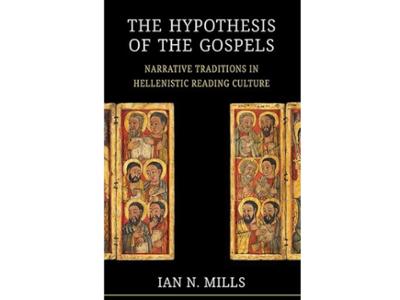
According to the publisher: “The gospels were not the only books in antiquity to retell the same story. Ancient readers had their own language for describing works that retread the same narrative ground. Different versions of a story were imagined as sharing a narrative core, called a hypothesis. Early Christian readers adopted this conceptual model in order to describe gospel literature, legitimize its pluriformity, and limit its diversity. Even before the term ‘hypothesis’ appeared explicitly, however, readers imagined gospels in roughly the same way. Christians did not radically reimagine the literary character of gospels at the end of the second century, when hypothesis language first appeared. Rather, the components of this model are already present in the earliest evidence for the reception of gospels. The standard model for thinking about pluriform narrative traditions in Hellenistic literary culture shaped the production and interpretation of gospel literature from the very beginning.”
Topic
Contact
Stacey Himmelberger
Editor of Hamilton magazine
