Clearing the Hill, One Snowstorm at a Time
Those are the mornings when members of the day shift pull onto campus between 4 and 5 a.m. The wind often cuts across the wide-open Facilities Management lot just off Griffin Road, whipping the snow sideways.
“It’s pretty eerie when you get here really early and it’s just a giant whiteout,” says Mike Jasper, grounds and fleet operations manager. “But you’ve got to do what you’ve got to do.”
Then it’s right to work.
Before the First Snowfall
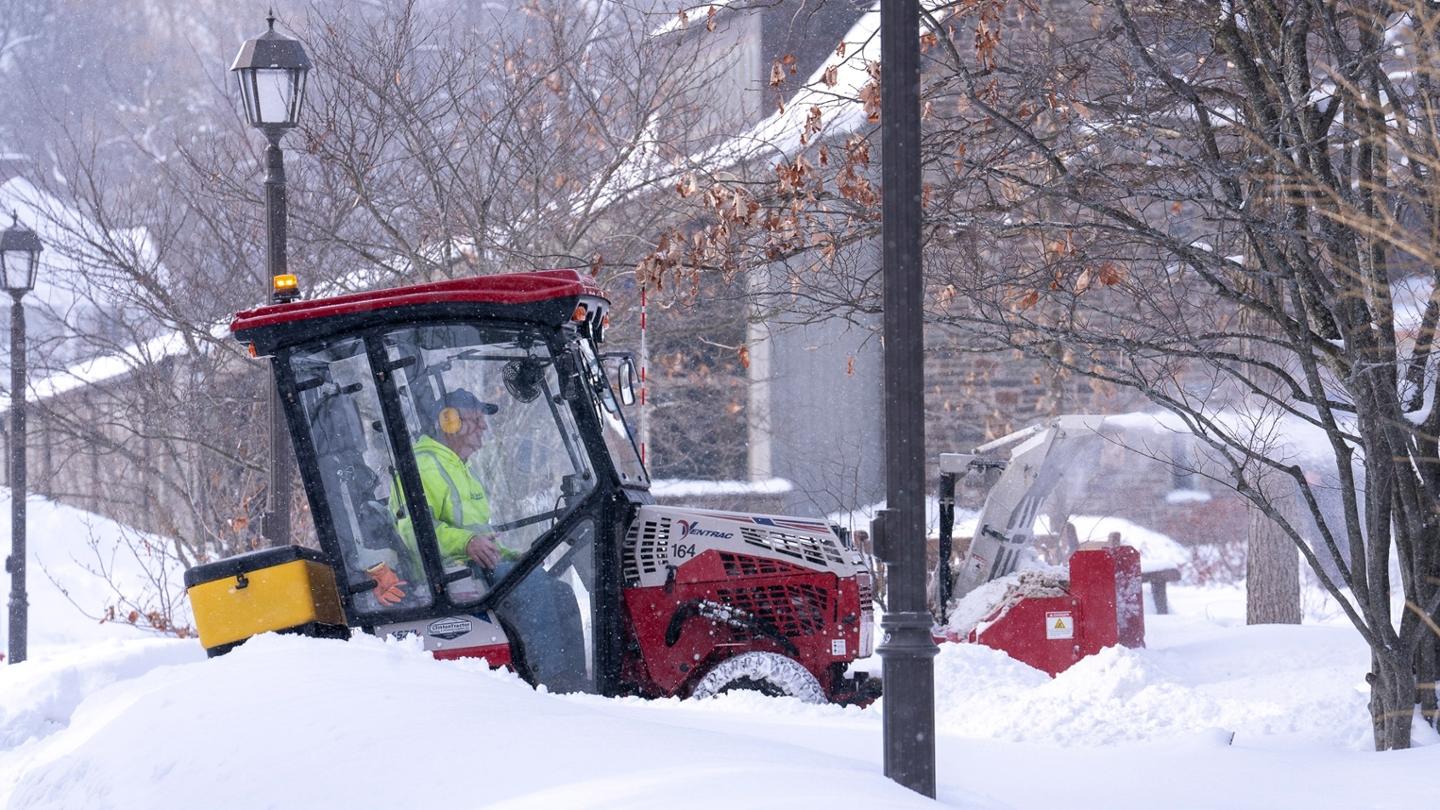
The College’s grounds crew, which Jasper oversees, includes 18 full-time staff members spread across multiple shifts, including evening and overnight coverage. Because much of their work takes place in low-visibility conditions — early, late, and in the dark — they begin preparing months before snow appears in the forecast.
“In the fall, we do a lot of scouting,” Jasper says. “We’ll go out and put up markers in tough spots so we don’t hit the curbs.”
On a residential campus, Jasper says the initial goal with each snowfall is straightforward: make it possible for people to get where they need to go safely.
“We don’t try to get too fancy on that first pass,” he explains. “Get through everything so people can get where they need to go. Then we go back and clean up the corners and edges.”
When a Storm is in Sight
For Jasper and his crew, a snowstorm isn’t a snow day, but a system that requires a heavy lift and also relies on coordination across the entire Facilities Management team.
“If it’s an overnight snowstorm, we’ll have people coming on shifts early,” Jasper says. “Other colleagues from Facilities Management will pitch in to help. It’s all hands on deck.”
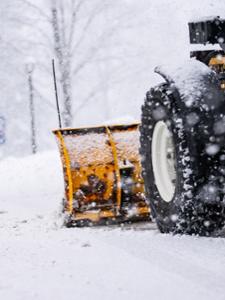
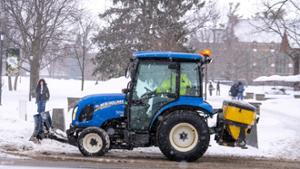
When forecasts show significant snowfall is likely, equipment is checked and crews coordinate staffing based on timing and expected accumulation. Sidewalk machines are fitted with plows, blowers, or brooms depending on conditions. Loaders stand ready for parking lots, salters for main routes, and mechanics remain on standby in case equipment fails.
“If it’s an overnight snowstorm, we’ll have people coming on shifts early. Other colleagues from Facilities Management will pitch in to help. It’s all hands on deck.”
As grounds crews focus on primary routes — campus roads and walkways, parking lots, building entrances, and high-traffic pedestrian areas — other Facilities Management staff members join in on the effort and turn the work into a team sport. Custodial teams clear entry walks and doorways, carpenters monitor roofs and watch for ice buildup, and mechanics work behind the scenes to keep boilers running and pipes protected during even the most relentless winter storms.
Snow Clearing By The Numbers
The Work That Follows
The snow subsiding rarely signals the end of the work required to handle it all.
“A storm is usually a multiple-day event for the Grounds crew,” Jasper says. “Even if it’s only a day’s worth of snow, people might be surprised to learn that we’re still working on that storm days – and sometimes almost a week – later.”
This winter has proven especially demanding. The 2025–26 season has been both snowier and colder across the Mohawk Valley. Nearby Utica typically records about 96 inches of snowfall annually, a mark the city had already surpassed by mid-February, with additional storms still expected.
The volume of snow has made snowbanks a second, ongoing project. As piles grow taller, they can shrink parking areas and block sightlines at corners and crossings, so cutting those banks back becomes essential.
“Some mornings, my truck tells me it’s minus 20 ... Once it gets down below 10 to 15 degrees, even the treated salt we buy isn’t helping the ice. It’s good for traction, but nothing’s melting.”
The cold adds another layer of complexity to the system. “Some mornings, my truck tells me it’s minus 20,” Jasper says. “It’s hard for everything to run and not break down in temperatures like that. Once it gets down below 10 to 15 degrees, even the treated salt we buy isn’t helping the ice. It’s good for traction, but nothing’s melting.”
On average, the team uses about 300 tons of bulk salt each year, according to Jasper, in addition to bagged salt used near entrances and other areas. When temperatures drop too low for melting to occur, crews rely more heavily on mechanical clearing and continuous monitoring, particularly during freeze-thaw cycles that can turn a mild afternoon into a slick morning.
“A lot of times, the first thing the crew will do is go out and check their spots,” Jasper says. “Even when we think, ‘Wow, the weather’s been great,’ it’s probably a skating rink by 5 a.m. because of the melt and run-off from the day before.”
‘A Sense of Accomplishment’
Despite the unpredictability and physical demands of winter operations, the team’s reward is simple.
“It’s a sense of accomplishment,” he says. “The crew would tell you, ‘We made it through.’ Everybody got to class. We didn’t have to close.”
And often, the best sign that the work is successful is its invisibility.
“A lot of times we’re happy if we’re not noticed,” Jasper notes. “That means we’re probably doing a pretty good job.”
Posted February 26, 2026