
Class of ’25 Takes Next Steps — to Grad and Professional School
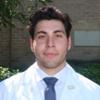
Hamilton majors: Biochemistry/molecular biology
What experiences at Hamilton led you to choose medical school?
I always knew I wanted to be a doctor, but my time at Hamilton crystallized that in ways I didn’t expect. Playing football connected me directly with orthopedic surgeons, and dealing with my own injuries gave me a front-row seat to the field and showed me its impact firsthand. Serving as an EMT was my first real exposure to emergency medicine and the adrenaline of being the person someone depends on in an emergency. And my time as senior class president taught me how meaningful it is to advocate for a community. That leadership experience has carried forward. I’m now an American Medical Association policy representative for our school on the national stage.
How did you become interested in medicine?
At its core, it’s my fascination with the human body. The mechanics of how we move and react in space. But what sealed it was seeing how profoundly a physician can change someone’s life by getting them back to doing what they love. Once I understood that could be my life’s work, nothing else came close. No matter how demanding the path, I knew I’d be fulfilled.
Who helped steer your career path?
I couldn’t have gotten here without my mentors on the Hill. Professor Max Majireck and Dr. Khanh Ha gave me my first opportunity to pursue research, which catapulted my trajectory. I’m now involved in a number of orthopedic clinical research projects at URSMD. Also, professors Widiss and Alhabian developed my critical thinking and communication skills. My coaches introduced me to everything Hamilton had to offer … they supported me through every injury on the field and pushed me to keep going. My teammates and friends have been incredible influences, too. Ryan Smolarsky ’23 and Luca Katz ’21, both football players, were role models who provided the blueprint for what success at Hamilton could look like.
What was your first semester of medical school like?
My first semester surpassed my expectations. I was elected class president and hit the ground running with community service and clinical research projects. I’ve also made great friends, and the community here reminds me of the tight-knit culture we have on the Hill. There are even a number of physicians here with ties to Hamilton, which makes it feel a little more like home.
What has surprised you?
How much I miss the humanities. We do integrate ethics and the history of medicine into our curriculum, but I miss the open curriculum and the freedom to explore ideas across disciplines at Hamilton. That breadth of learning shaped how I think, and I carry it with me every day.
What are your plans after medical school?
I hope to become an orthopedic surgeon, working with athletes and people of all backgrounds to get them back to doing what they love. It’s the intersection of everything I care about. The mechanics of the body, the art of surgery, and the ability to make an immediate and tangible difference in someone’s life.
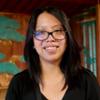
Hamilton majors: Theatre and Japanese studies
What experiences at Hamilton made you want to pursue an MFA in such a specific area?
While I had some experience in theatre before college, it was at Hamilton that I discovered and fell in love with stage management and performance facilitation. That being said, stage management is not formally taught at Hamilton. While I had great mentors across the Theatre Department, I knew I needed to look for a post-grad program or apprenticeship where I could make the right connections and learn from other stage managers.
What led to your interest in that area?
Through stage management, I feel my values and qualities as a human can be best exercised, while being able to observe and learn from everyone else in a production/creative team. Some of my best experiences as a stage manager come from creating spaces in which I get to watch other artists play and express love for what they do.
Did you have any mentors here that helped guide you on that path?
The entire Theatre Department helped guide me in exploring different positions. The opportunity to assistant direct two mainstages under Mark Cryer allowed me to explore creative leadership, and the chance to lead a stage management team for two mainstages (under Emily K. Harrison and Craig Latrell) allowed me to work on my management and show calling skills. Tobin Ost and Jessica Buttery were crucial to my exploration of the wide range of theatrical productions I’m curious about from research and technical angles.
How was your first semester at Columbia? Is it all you hoped for? Any challenges you want to share?
I am very thankful to be surrounded by other stage managers and to be learning from those actively doing the job at the highest levels. Columbia is a challenging school and the rigor cannot be ignored. Luckily, I feel like the discipline and self-management that I learned at Hamilton have transferred over well and have helped me keep up with the busy schedules. I do recognize I miss the close proximity to my dorm when I was living on campus at Hamilton, as the commute around the city can be exhausting!
What has surprised you?
All stage management professors/lecturers at Columbia are actively working around the world. While this can mean inconsistent class schedules, it also means that I get to learn from people working all along Broadway (and even shadow them and their stage management friends!). We recently had an invited guest series with two iconic stage managers who have run 10 Olympic ceremonies! I am thankful for the opportunities to learn from incredible people in the industry and to feel the possibilities become less foreign.
What do you ultimately hope to do after you obtain your MFA?
There’s a wide range of performance genres that I would like to stage-manage post-MFA. While studying stage management, I have also been in search of programs through which I might continue my artistic research in cultural/traditional performance. I hope to explore different internships and opportunities beyond theatre for the next two years and make connections that will allow me to stage-manage and pursue my academic curiosities.
Anything you want to add?
It can be difficult to consider a career in the arts, let alone an MFA program, at this time. However, if the arts is what you love, and storytelling is the angle from which you are able to contribute to the world and your own well-being, I strongly believe it is crucial to not deprive yourself of following your passions.

Hamilton major: Chemistry
What experiences at Hamilton led you to pursue a Ph. D. in chemistry?
My experiences in research, particularly the intellectual freedom to try different fields, led to this path. I started working in a lab my freshman spring and fell in love with the ability to engage with news and solve problems. At Hamilton I was able to cultivate my interests in environmental science, social issues, and chemistry which led to me working on new materials for precise separation and water remediation. Working in research labs as well as with the COOP furthered my interest in working in chemistry with a cause.
Did you have any mentors who helped guide you on that path?
Yes, Dr. Wesley Kramer (chemistry), Dr. Max Majireck (chemistry), and Prof. Mireille Koukjian (Arabic) were all instrumental in my personal and professional growth at Hamilton.
How was your first semester of grad school? Is it all you hoped for? Any challenges you want to share?
My first semester was very challenging but also very rewarding. I found my biggest challenge to be time management over all of the different responsibilities a grad student has. However, I discovered how much I love working with students as well as writing and designing research proposals. I really love the process of working toward a long-term goal and the control I have over my time.
Has anything surprised you?
I'm surprised at how I can still make time to enjoy the beautiful Florida nature. Did you know there are wild horses and bison right outside of town? We also have alligators and armadillos all over campus. It makes for an amazing break from research and studying.
What do you ultimately hope to do after you obtain your Ph.D.?
After my Ph.D., I aim to work on developing polymers for treating pollution in the Gulf of Mexico and the Caribbean.

Hamilton major: Geosciences
What experiences at Hamilton made you want to pursue a Ph.D. in such a specific area?
I came to Hamilton knowing that I wanted to study volcanoes. Taking Inorganic Chemistry with [Professor] Karen Brewer made me particularly interested in studying minerals or gases in graduate school. For my senior thesis, I used satellite-based remote sensing to study ground deformation at White Island volcano. Satellite data is available for analysis in minutes to hours so it’s a very useful tool for near-real-time monitoring.
What led to your interest in volcanoes?
Growing up in California, I visited many volcanoes on road trips. In sixth grade, I learned that I could go to college to study earthquakes and that morphed into my dream to one day become a volcanologist. In 2023, I took a month-long field course at Hawaii Volcanoes National Park where I spent all day hiking over lava flows, mapping them.
Did you have any mentors who helped guide you on that path?
The most valuable mentor I had at Hamilton was [Professor] Dave Bailey. Even in semesters where I wasn’t taking a class of his, I could always pop into his office to chat about volcanoes or get advice. Shreya Kanakiya, my thesis advisor, and Brandi Langsdorf, my boss at the Hamilton Analytical Laboratory, also gave me great advice on finding a graduate program that best fit my goals.
How was your first semester in Alaska? Is it all you hoped for? Any challenges you want to share?
I have loved my time in Fairbanks so far. I’m currently improving the methods that the Alaska Volcano Observatory uses to track sulfur dioxide emissions. I’ve gotten to learn a ton about Alaska geology, volcanology, programming, statistics, and atmospheric sciences. The hardest parts have been familiarizing myself with literature in my field, managing long-term deadlines, and finding a work-life balance.
What has surprised you?
Since I’m a part of the Alaska Volcano Observatory, I’m in the discussions when we decide to change the color code (risk level) of volcanoes. Members of my lab rotate being on satellite detection duty, where we look through the satellite imagery and report the mass of sulfur dioxide that volcanoes in Alaska are releasing. It is exciting to contribute to active volcano monitoring, even as a first-year graduate student.
What do you ultimately hope to do after you obtain your Ph.D.?
In the future, I want to work at a USGS Volcano Observatory or as a professor.

Hamilton major: Physics
What made you want to pursue this course of study?
During my time at Hamilton, I wasn’t able to take a data science class. However, I realized my interest in data science through coursework in computer science, as well as in physics and math. Data science draws on skills that I’ve learned in various classes.
Did you any mentors help guide you on that path?
I did have a very helpful mentor during my time at Hamilton and that was, and still is, Adam Lark. I completed research with Adam over the summer of my sophomore year and have taken many classes with him. He’s given me his unconditional support and has always treated me in a friend sort of way, and we are still in touch.
How was your first semester at Colorado? Any challenges you want to share?
I really enjoyed my first semester at Colorado. Like with anything new, there are a lot of great things and a lot of things that I miss. One thing I find a challenge here is that it is a lot more independent and harder to form close relationships with the professors.
What has surprised you?
I was worried that going down a slightly different path from physics would be hard, but what I have realized is that my time at Hamilton has set me up to succeed. Hamilton, specifically the physics classes, has taught me that it’s okay to not understand something right away, and that a vital part of learning is failing at first.
What do you hope to do after you obtain your master’s?
I am still unsure. Right now, the job market of data scientists is constantly changing, and jobs that are available now might not be in two years and vice versa. Right now, I’m focusing on my classwork while keeping my eyes open to new opportunities.
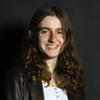
Hamilton majors: Theatre and Psychology
Were there any experiences at Hamilton that made you want to pursue a law degree?
I somewhat knew that I wanted to pursue law when entering college, but my interest was definitely solidified at Hamilton. In Professor Anechiarico’s Constitutional Law class, I experienced a deep rush of excitement from being able to pair my theatre-based performance knowledge with oral advocacy and the defense of a mock Supreme Court case. Similarly, I gained a deep appreciation for the study of law when taking Professor Williams’ interdisciplinary law and psychology courses and was able to crystallize that passion in my psychology thesis. For that semester-long project, I conducted a study on the effects of defense attorney anger and authenticity on layperson decision-making.
What led to your interest in the law?
Since I was little, I’ve been someone who has enjoyed utilizing media analysis, research from across sources, and creative ideas to craft arguments: all of which are in the core lawyer skillset. However, I am also an actor, musician, director, writer, and general creative at heart; law, with all of its presentation-based flair, allows me to exercise those passions in a concrete manner. Finally, I found myself entranced with the study of how emotions, memory, and so many other psychological concepts influence the application of the law in our justice system. As such, pursuing law really felt like a perfect mixture of all my interests, experiences, and long-term goals.
Did any mentors help guide you on that path?
Professor Keelah Williams was truly the best mentor I could have asked for. As my professor, psychology major advisor, and thesis advisor, she was always there to support me on my journey to law school, whether that meant giving advice on my application materials, pushing me to be a more concise and clear writer in my scientific papers, or being one of the most fascinating professors I have ever had the pleasure of learning from.
How was your first semester at Georgetown? Is it all you hoped for? Any challenges you want to share?
Law school is definitely challenging, but I’ve also enjoyed it very much. I adored being able to manipulate doctrine in absurd and creative ways in my torts class (such as arguing that the Prince in Snow White was liable for false imprisonment), and am currently fascinated by the depths of determining what constitutes an unreasonable search and seizure by a drug-sniffing dog in my legal writing class.
What has surprised you?
Definitely the ambiguity that is inherent in the law. When you’re growing up, laws are always referenced as concrete pillars that society is bound to follow. However, when you’re actually studying them, you learn that there’s always two or more ways to argue around a specific issue. In law school, we’re taught to ask things like, “what does x word of the statute mean,” and “how could this be interpreted differently in a different hypothetical?” It’s messy and fascinating and a true treat for anyone who loves absurdist creative perspectives.
Is there a specific area of law you want to pursue after you obtain your JD?
I’m hoping to work as a litigator, both in a generalist practice and potentially as a specialist in entertainment and media litigation and intellectual property litigation. I also hope to pursue a good deal of pro-bono work, specifically in the field of criminal justice law.
Anything you want to add?
I want to thank the Hamilton alumni community for their continued support during my time at law school. Every person I have reached out to has immediately been willing to chat, offer advice, and communicate their own stories about the chaos of law school. I don’t believe that many other colleges can boast such an amazing and responsive collection of alumni, and I’m grateful that I’m a part of that network.
Posted February 20, 2026
More Hamilton Outcomes
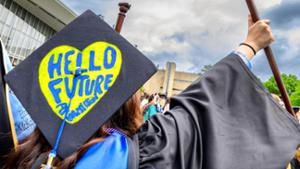
They arrived with curiosity, drive, and a sense of possibility — and now Hamilton’s Class of 2025 is stepping boldly into what’s next, with graduation canes in hand and valuable lessons learned. What shaped them during their four years on College Hill? Which moments, mentors, and courses stand out?

We reconnected with some members of the Class of ’25 to ask a different question: What are you taking away from Hamilton?
