Five Seniors Receive Fulbright ETAs
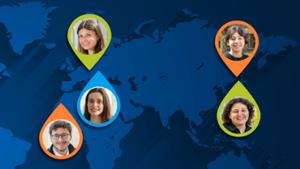
Five members of Hamilton’s Class of ’26 will be leaving College Hill for classrooms abroad through the prestigious Fulbright English Teaching Assistantship program. While helping local English teachers, they’ll embrace new cultures and serve as bridges between the U.S. and the world. The five students are Morgan Hodorowski, Erin Merenich, Sydney Piccoli, Katerina Sabella, and Gregoire Winston.
Meet the Students
Headed to Germany
Why did you choose the country you’re going to? Have you been or studied there before?
I began studying German during my first year of college, following a larger interest in European history and politics. I’m glad I chose to continue with it and major in German, as it has become a meaningful skill that sets me apart and uniquely positions me to begin pursuing a career in international relations. I haven’t had the opportunity to visit Germany yet, so I’m excited to have this life-changing opportunity extended to me through the Fulbright program. Studying the language and culture has already made the country feel both intellectually and personally meaningful to me.
Who at Hamilton mentored you and how?
In the German Department, Professors Franziska Schweiger and Christiane Fischer have been invaluable in shaping my academic interests and my decision to apply for a Fulbright. Professor Schweiger mentioned Fulbright early on in my study of German, and it has been a goal of mine ever since. In the Government Department, Professor Erica De Bruin was also a key mentor. I had the opportunity to work with her as both a research assistant and a teaching assistant, experiences that further solidified my interest in government.
All of these mentors were incredibly generous with their time and guidance, particularly in helping me refine my Fulbright application and clearly articulate my goals.
Did you have any learning experiences outside the classroom that led you to apply for a Fulbright ETA?
Much of my interest in serving as an ETA comes from my experiences working with students across a range of age groups. Through tutoring and reading support, I learned how to adapt my communication style to different students, and how rewarding it can be to help students build confidence in their own abilities.
What do you hope to learn and accomplish while on your Fulbright year?
I hope to continue developing my German language skills while gaining a deeper understanding of everyday life and education in Germany. Having never lived in a city before, I’m also excited to step into a new environment and experience daily life in Berlin. I hope to build meaningful connections within my community there and contribute in a positive way as both a teacher and a cultural ambassador.
What are your post-Fulbright plans?
I plan to return to the United States to continue my education. I’ve been considering pursuing a dual degree program with a J.D. and a Master of Science in Foreign Service, with the goal of building a career that engages with international policy and global affairs.
Headed to Taiwan
Why did you choose the country you’re going to? Have you been or studied there before?
I’ve never been to Taiwan. In fact, I only just went to Asia for the first time this past spring with Professor [Maurice] Isserman’s History and Literature of Himalayan Mountaineering course. That was definitely part of the motivation for choosing Taiwan — a place I’ve never been to that is waiting for me to explore and learn from.
I was also looking for a Fulbright placement that could reflect my life’s passions and values. I was struck by Taiwan’s rich cultural heritage, commitment to education, vibrant arts scene, and, of course, natural landscapes. I also read on the Fulbright website that Taiwan has a preference for previous teaching experience, which I knew I had with my COOP community service internship. So, overall, it just seemed like a good fit!
Who at Hamilton mentored you and how?
I have had no shortage of mentors at Hamilton from faculty to staff to friends. I’d particularly name the communities I’ve been lucky enough to be part of: Amy James and the COOP, Marjorie Hurley and the Wellin Museum, the Art History Department, namely professors [Arathi] Menon and [Nadya] Bair, and the women’s rugby team. Amy has taught me the importance of looking outside of your own world and into the world of others; Marjorie has fueled my passion for connecting with others in more ways than I can count; Professors Menon and Bair have taught me how to live a life entrenched in asking questions, and rugby has given me a place on this campus to just let it all out. And, of course, Lisa Grimes, director of student fellowships, was a great mentor and friend throughout the application process.
Did you have any learning experiences outside the classroom that led you to apply for a Fulbright ETA?
It feels like my entire life has been one big experiential learning experience. I spent my first two years at Hamilton doing a community service internship through the COOP. I worked at Thea Bowman, a daycare and elementary school in Utica. That experience taught me just how deeply I value investing in the educational spaces around me and connecting with children. Those very passions have translated into my role as a COOP Clinton Schools Education Fellow, where I organize tutoring opportunities for Hamilton students at local Clinton schools.
What do you hope to learn and accomplish while on your Fulbright year?
I hope to learn things I did not even think of learning; to have experiences and meet people that challenge me to grow in unexpected yet beautiful ways; to be pushed outside of my comfort zone to the point where I redefine what’s comfortable to me; to explore Taiwan’s natural landscapes and agricultural practices; to learn about folk art traditions indigenous to Taiwan.
What are your post-Fulbright plans?
It’s hard to think about post-Fulbright plans because I don’t know what will come of Fulbright — what I will learn about myself and the world around me. I know that, for sure, I will keep on valuing adventure and community like I do now. And, directly after Fulbright, I’d like to backpack across South Asia and cross off some bucket-list items like the Ha Giang Loop. And, down the line, I see myself returning to the classroom as a student.
Headed to Morocco
Why did you choose the country you’re going to? Have you been or studied there before?
Morocco was a clear choice given my academic interest and family heritage. Growing up, I heard countless stories from my grandfather about his experience living in Morocco from his childhood to his early 20s. Having visited the country multiple times last year during my study abroad in France, I was particularly affected by Morocco’s unique cultural fabric, which combines influences from across the continent, including parts of Africa, Europe, and the Middle East. It is in pursuing a country that has a similar multicultural background to my own (French mom, American dad, living in Miami, a highly Latino-centric city) that I think I will be able to thrive the most, pursuing this fellowship with a sense of curiosity and a desire to connect with people different from me.
At Hamilton, taking classes on Maghrébine French literature opened my doors to conflicting narratives that the history books did not teach me early on. While in France, I engaged with text from famous Moroccan authors that gave me a better glimpse into their people’s history. I also took a class on immigration upon my return with French Professor [Claire] Mouflard. Knowing that Morocco is a country steeped in a long tradition of migration and movement, I wanted a subject matter that was directly applicable to the potential award I’d receive with the Fulbright.
Who at Hamilton mentored you and how?
At Hamilton, I was particularly mentored by French professors [Martine] Guyot-Bender and Mouflard. Professor Guyot-Bender guided me throughout my year in France, where I got the chance to take a class on contemporary European politics and the overlap with the Morocco. Spending a semester under her guidance opened the door to the IMA (Institut du Monde Arabe), which provided academic and professional insights that I had not yet come across. During my free time in France, I’d take bike rides into the markets on the outskirts of the city, where the majority of Moroccan and Algerian population lives. It was in these environments that I felt most comfortable, where I could eat my merguez sandwich and drink my mint tea, two Moroccan specialties I am in love with. Without studying in France for a year under both professors, while also taking classes with them back in Clinton, I wouldn’t have had the same passion for teaching and Morocco as a whole.
Did you have any learning experiences outside the classroom that led you to apply for a Fulbright ETA?
One particular experience that drew out a desire to teach was my TA sessions in French, both this and last semester. This is where I was able to connect with students, making my own lesson plans and engaging in activities and icebreakers. As a neo-teacher myself, I always try to think what impact the best teachers have had on me and how they were able to turn learning into a pleasure. It is usually through curiosity and discovery that their subject matter came across as engaging, and I’ve always attempted to mimic that within my TA classes. I like to incorporate games that discuss aspects of sociology, geography, and history that could be pertinent to the subject matter for that TA class. It’s through these connections and this effort to draw out similarities that I best prepare my students, who are usually sophomores going into junior year, for their experience going abroad to France. Seeing their confidence in speaking the language and knowing the culture was the best reward I could ask for before they embark on their study abroad journey, the same one I had the pleasure to be a part of.
What do you hope to learn and accomplish while on your Fulbright year?
I’m hoping to learn Arabic, but also Darija, the local dialect of the country. While I’m coming as an American student, I want to assimilate myself as best as I can within the conditions I’ll be put in. While I’m not sure whether I’ll be in a larger city, like Rabat Casablanca or Tanger, or a more rural environment, I’m looking to leave a positive impact on my community.
I’d like to support the many animal shelters the country has, or participate in beach cleanups on the coast, or assist in any translation, both literal or cultural, for nonprofit groups. I’m open to a wide variety of experiences. Ultimately my goal is to leave my Fulbright proud of the impact I have left and equipped with the tools that would enable my success working for the U.S. government going forward.
What are your post-Fulbright plans?
After my Fulbright, I’m intending to pursue a law degree and potentially work for the federal government.
Headed to the Czech Republic

Why did you choose the country you’re going to? Have you been or studied there before?
I’m drawn to the Czech Republic’s cultural emphasis on literature, dance, and nature. Through my education at Hamilton — and while studying abroad in Bath, England — literature has been central to my understanding of societal norms and history. The novels I read in classes, such as Nineteenth-Century American Literature and Jane Austen, demonstrated to me how literature both reflects and challenges societal values.
I was excited to discover the rich Czech literary tradition, where writers including former president of the Czech Republic Václav Havel have played a central role in the country’s identity and development. While there, I’m eager to use literature, dance, and time spent outdoors to engage with students and community members.
When I was beginning to apply for the Fulbright, I reached out to Hamilton alumna Eliana Good [’24], who had recently returned from her English Teaching Assistant (ETA) grant in the Czech Republic. Hearing about her experience connecting with her community made me excited for the opportunity to interact with community members, fellow ETAs, and mentors. I’m looking forward to becoming an active community member and for the opportunity to reflect on my experiences with like-minded ETAs.
Who at Hamilton mentored you and how?
I have enjoyed my time taking classes in education, where I’ve developed a clearer sense of the educator I hope to become. Professor [Chenyu] Wang, with whom I’ve taken several classes, has been instrumental in providing me with encouragement and advice regarding coursework and internship opportunities. Additionally, the members on the Hamilton Dance Team have been significant role models and mentors to me throughout my time at Hamilton. Their leadership, dedication, and kindness have shaped my four years and have shown me the importance of finding community through shared passions.
Did you have any learning experiences outside the classroom that led you to apply for a Fulbright ETA?
Over the past two summers, I’ve worked with education nonprofits in New York City and Greensboro, N.C. These experiences strengthened my communication skills and deepened my commitment to becoming a compassionate educator. Last summer, I taught literature to seventh graders at the Breakthrough New York program. This was the first time I was leading a classroom, and I quickly learned how creating an inclusive and positive environment gave my students confidence to share their opinions and connect the literature we were reading to their lives and the world around them. During my year teaching in the Czech Republic, I hope to encourage open and thoughtful communication with students so we can better share our backgrounds and culture.
At Hamilton I’ve been involved in Alternative Breaks (AXB), through which I’ve had the opportunity to volunteer within the Philadelphia Community Schools and with Habitat for Humanity in Georgetown, Del. These experiences have demonstrated how individuals can use creative solutions and collaboration to address social issues within communities. I’ve truly enjoyed being able to learn from those I’ve met on AXB trips and have become a more curious person. I look forward to learning more about the community practices present in the Czech Republic.
What do you hope to learn and accomplish while in your Fulbright year?
I hope to become a more adaptable and creative educator while building connections with students and community members. I also look forward to familiarizing myself with Czech teaching pedagogy and with the Czech language. Traveling throughout different regions of the country and Central Europe will also be an exciting opportunity and learning experience.
What are your post-Fulbright plans?
After Fulbright, I plan to continue teaching and would like to learn how to support students with learning difficulties through hands-on practice and mentorship. I will also look to get involved with literature-based educational research.
Headed to Taiwan
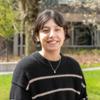
Why did you choose the country you’re going to? Have you been or studied there before?
Taiwan places a strong emphasis on cross-cultural dialogue and early childhood language learning, and I wanted to support this educational mission. I have also been studying Mandarin here at Hamilton my whole four years but was not able to go to a Mandarin-speaking country, so I wanted to be in a country that provided both a cultural and linguistic immersion.
Who at Hamilton mentored you and how?
I’ve had a lot of different mentors here at Hamilton. Professor [of History] Mackenzie Cooley has been especially supportive. She’s provided me my first opportunities in the world of academic research and has encouraged me to pursue my research aspirations.
Did you have any learning experiences outside the classroom that led you to apply for a Fulbright ETA?
The summer following my freshmen year I interned as an instructional paraprofessional at a school for students with disabilities. In this role, I supported classroom instruction and worked one-on-one with students. I appreciated being able to work collaboratively with a team of educators and to have a direct impact on students’ learning. When I first heard about the Fulbright ETA opportunity, my time as a paraprofessional inspired me to apply.
What do you hope to learn and accomplish while on your Fulbright year?
I hope to become a more conscientious and curious global citizen. I look forward to immersing myself in a different culture, strengthening my Mandarin proficiency, and working with a Fulbright cohort dedicated to cross-cultural exchange.
What are your post-Fulbright plans?
While I’m in Taiwan, I plan to apply for post-graduate programs in literature. But, I will also keep my options open for different opportunities in education and research.
Fellowship Advising at Hamilton
The Office of Student Fellowship helps Hamilton students and recent alumni connect with transformative experiences and opportunities.
Posted May 14, 2026
Fellowships & Scholarships
Hamilton Again a Top Producer of Fulbright U.S. Students
For the 22nd consecutive year, Hamilton has been recognized among the colleges and universities with the most students selected for the Fulbright U.S. Student Program. For 2025-26, 43 Hamilton students and alumni applied for the U.S. Student Program, and five received the grant. The recipients are pursuing Fulbright English teaching assistantships in Indonesia, Vietnam, and Spain.
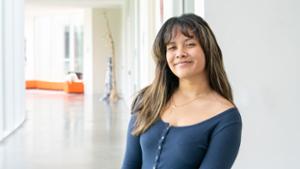
Mele Kaneali’i ’27 Awarded Truman Scholarship
Mele Kaneali’i ’27 is Hamilton’s latest — and fourth ever — recipient of the prestigious Harry S. Truman Scholarship, a graduate fellowship awarded to college juniors pursuing careers in public service. After graduating from Hamilton, the government major intends to pursue a J.D. and a master of urban and regional planning in housing policy.
