Meet Hamilton’s Watson Fellowship Finalists
“The Watson Fellowship year is an opportunity like no other,” said Lisa Grimes, director of student fellowships. “Fellows are challenged to grow in so many ways; they learn not only about their topic and the world, but also about themselves and what they're capable of achieving. Any Hamilton student looking to do something completely different the year after graduation should give serious consideration to applying,” Grimes said.
Hamilton’s nominees this year are Caroline Boies, Arshdeep Kaur, Lucy Meola, and Jun Reiss. We caught up with them to learn about their proposed projects, what sparked their interest, and where they hope to travel if chosen as a Watson Fellow.
Fellowship Advising at Hamilton
Students interested in learning about the Watson Fellowship can contact the Office of Student Fellowship to get started.
Hometown: Katonah, N.Y.
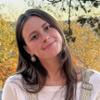
Summarize your proposed project.
I have proposed to study the ways in which refugees and immigrants use food as a way to build community and remember home around the world.
What do you hope to accomplish through your project?
I hope to return as a more effective changemaker, understanding how different cultures and structures work towards building community and welcoming diversity and newcomers…
I want to hear as many stories and meet as many people as I possibly can, with hopes of positively contributing to their lives as well.
What countries do you plan to travel to if you are awarded the Watson? Why did you choose those?
I would plan to travel to India, Denmark, France, Chile and Australia. It was very difficult to narrow down this list, however I believe that what I have ultimately landed on will give me a wide range of infrastructural, cultural and geographical diversity allowing me to widen my perspective and gain a vast world experience.
What are you involved with at Hamilton that might relate to/influence your Watson proposal?
This project is strongly influenced by my deep connection with Utica, N.Y. Since freshman year, I have spent much of my time volunteering and working in a number of different capacities in the city.
Many of my favorite experiences have been with Utica’s refugee population, working with youth to adults in different ways. I work as a senior education fellow in Utica with the COOP, as a TA for a food related course [Food in Literature and Film], and am an avid volunteer within the city.
What mentors at Hamilton have influenced you or sparked your curiosity about your project?
My boss and friend, Amy James, has influenced me in many ways over the years, particularly with my engagement in Utica. She is inspiring and a great advocate for off-campus volunteer work and exposure, and I owe much of my own experiences to the hard work and dedication of herself and the COOP. Additionally, I’ve had the privilege of learning from and working for Professor Naomi Guttman in the realm of food and literature/film.
Currently, I am taking an anthropology course looking at food justice in the Mohawk Valley with [Associate Professor of Anthropology] Julie Starr - I find her class extremely engaging and deeply important, and it is pushing me to expand my project proposal under the lens of food justice.
What drives you or what is your mission?
Community based work is the bread and butter of my life. I am driven by working with and for others, and my consistent goal is to use my time and skill sets to benefit others’ lives. Through Watson, I hope to return and continue this work in a more effective and well informed way.
What are your post-Watson plans?
Although I am still relatively undecided, I know that I want my future to revolve around community work and development. I’m extremely interested in an opportunity like the Peace Corps, and eventually pursuing a masters in international development. I hope that the Watson experience can give me even further clarity and insight toward what the future holds.
Hometown: Indianapolis, Ind.
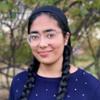
Summarize your proposed project.
My proposed Watson project, Bridging Gaps in Global Cancer Care Access, is to explore how communities and healthcare systems address disparities in cancer prevention, diagnosis, and treatment. I plan to work with nonprofits, research groups, and community health initiatives to understand how local strategies improve access to care. By comparing approaches across countries, I hope to learn how community-driven solutions help overcome systemic barriers.
What countries do you plan to travel to if you are awarded the Watson? Why did you choose those?
I plan to travel to India, South Africa, Australia, and the United Kingdom. Each country represents a different healthcare model and set of challenges, from resource limitations to geographic barriers affecting rural communities. Comparing these systems will help me understand how diverse societies approach cancer care access and equity.
What do you hope to accomplish through your project?
I hope to understand how grassroots organizations, healthcare providers, and communities work together to improve cancer care access. By learning directly from patients, caregivers, advocates, and clinicians and listening to their lived realities, I want to identify strategies that empower underserved populations. These lessons will shape how I approach healthcare equity as a future physician and advocate.
What are you involved with at Hamilton that might relate to/influence your Watson proposal?
At Hamilton, I’ve been involved in both scientific research and community engagement. While my research experiences introduced me to the process of asking questions and exploring problems through science, my work through COOP as a STEM Outreach Fellow and as a Community Service Intern connected me directly with local communities. These experiences helped me see how education, support systems, and access to resources can shape people’s opportunities and well-being.
Do you have any mentors at Hamilton who have influenced you or sparked your curiosity about your project?
Amy James, the director of COOP, has been an important mentor. Working with her through outreach and community engagement reinforced my interest in this work and taught me a lot about the importance of community-centered approaches. Her mentorship helped me see how meaningful change often comes from listening to and working alongside the communities you hope to support.
What drives you, or what is your mission?
My experiences with healthcare disparities in my family and community have shaped my mission to make healthcare more equitable and accessible. I want to understand not only the science of disease, but also the social and structural barriers that affect treatment and prevention. Ultimately, I hope to become a physician who combines clinical care with advocacy for underserved communities towards a more equitable future.
What are your post-Watson plans?
After the Watson Fellowship, I plan to pursue a Master of Public Health and attend medical school. I hope to work in oncology while advocating for greater equity in healthcare and improving access to care for underserved and marginalized communities. The Watson year would allow me to learn from different healthcare systems and perspectives, which I hope to carry forward into my future work as a physician and advocate.
Hometown: Sunnyside, N.Y.

A dancer, Writing Center and Language Center tutor, and a member of the women’s swimming and diving team, Meola is frequently active outdoors and with environmental initiatives on and near campus.
Summarize your proposed project.
My proposed project seeks to explore rewilding, a novel approach to conservation where humans take an active role in restoring degraded ecosystems, in order to learn about how people can develop more hopeful and resilient forms of environmentalism. The connections I make through volunteering at rewilding projects will help me build an archive of interviews, photographs, and personal reflections on the benefits, challenges, and ethical considerations of rewilding. This archive will provide the raw material for periodic blog posts in which I will track how rewilding changes my perception of our connections with the environments we inhabit.
What countries do you plan to travel to if you are awarded the Watson? Why did you choose those?
I plan to travel to five countries—Scotland, Chile, Argentina, Uzbekistan, and Namibia — although I am open to potential side-quests. Scotland has been home to widespread rewilding efforts for longer than most other parts of the world and has developed a community-oriented, grassroots approach. In Chile and Argentina, I hope to unpack the challenges and opportunities of pursuing rewilding in rare ecosystems along the border between two nations. Uzbekistan is home to arguably the world’s most ambitious rewilding project, an effort to plant a forest on the bed of the desiccated Aral Sea. Finally, I chose Namibia to help complicate my perspective on rewilding by confronting the impacts of colonialism on efforts to restore its ecosystems.
What do you hope to accomplish through your project?
I’m not just hoping to learn about rewilding; I also hope to understand what drives people to take positive action on environmental issues. I want to leave the Watson year with a greater understanding of the technical and interpersonal skills relevant to rewilding work but also a broader sense of how to promote hopeful environmentalism.
What are you involved with at Hamilton that might relate to/influence your Watson proposal?
Involvement with research in the Environmental Studies Department certainly influenced my decision to apply for the Watson Fellowship, although my research never aligned exactly with the topic I’m pursuing in my proposal. By volunteering with Harvest, Hamilton’s student-led food recovery initiative, I’ve also witnessed how many people on this campus are willing to take time out of their day to work on an issue that is both social and environmental.
What mentors at Hamilton have influenced you or sparked your curiosity about your project?
I have to credit Professor Peter Cannavò in the Government Department for helping shape my thinking about the relationship between people and the environment. As my advisor for two summer projects on very different dimensions of environmental research and my senior Environmental Studies thesis, Professor Aaron Strong has also been really important.
What drives you or what is your mission?
I just hope that I can make a positive impact in the sustainability spaces.
What are your post-Watson plans?
I have no idea! Eventually I hope to pursue a career in climate change mitigation or adaptation, but I might go back to school first. One of my other major reasons for pursuing the Watson was to develop more real-world experience to help narrow my interests for further career plans.
Hometown: Brooklyn, N.Y.

Summarize your proposed project.
In very simple terms my project aims to understand how people react when forced to move to a place where they do not look, speak, or act like the people who are already there. Through working with cultural organizations, my Watson year aims to understand overcoming cultural and phenotypical differences in the face of global forced migration.
What countries do you plan to travel to if you are awarded the Watson? Why did you choose those?
I plan on traveling to Chile, South Africa, Uzbekistan, and am considering adding either Tanzania or India. In Chile, there is an ethnically Palestinian enclave, numbering around 500,000, having fled Palestine first because of the Crimean War and the draft to the Ottoman Empire as well as later due to the Nakba and the 6 Day War. Additionally, in South Africa there is an ethnically 'Malay' or Southeast Asian enclave made up of the ancestors of mainly Muslim political and religious prisoners of the Dutch East Indies Company. Finally, there is an ethnically Korean enclave in Uzbekistan which Joseph Stalin forcibly shipped from the Soviet Far East to Central Asia.
What do you hope to accomplish through your project?
The 21st century has been marked by contentious news stories of mass migration, as individuals and families across the globe are pushed to leave their homes in the hopes of economic opportunities and safety in new lands. In their journeys, however, they often encounter violence and fear. My project aims to learn from historical success stories of cultural fusion and identity, understanding how cultural enclaves have formed out of necessity, and have succeeded over time despite extremely difficult initial migrations. For me personally, everyone has a logic for the way they do things. In the interest of understanding and growth, I want to understand these different logics, how they can be fused as well as how they can stand in conflict.
What are you involved with at Hamilton that might relate to/influence your Watson proposal?
I am currently researching for my thesis in Sociology utilizing ethnography and interviews to better understand efforts to belong for refugees from Myanmar in Utica. Furthermore, I am the Lead Fellow at the Days-Massolo Multicultural Center, directing and organizing the DMC Fellows as well as the cultural organizations which fall under the DMC Umbrella. I also hold positions as Docent at the Wellin as well as Peer Mentor, which I feel are relevant and influenced my Watson proposal.
What drives you? What is your mission?
Very simply, I want to help people. The way I want to do this is by ending the idea of one-size-fits-all solutions, such as rehabilitation for everyone who breaks society's rules should be locking them in a cage. So much strife occurs because of lack of understanding, often because of cultural differences, even that which appears between neighboring communities. I want to understand the logic behind why people do what they do and use it to create better, more nuanced and specific solutions to issues.
Fellowships & Scholarships
Five Seniors Receive Fulbright ETAs
Five members of Hamilton’s Class of ’26 will be leaving College Hill for classrooms abroad through the prestigious Fulbright English Teaching Assistantship program.
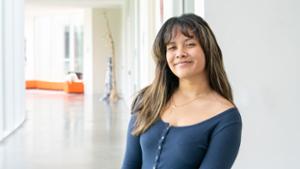
Mele Kaneali'i ’27 Awarded Truman Scholarship
Mele Kaneali'i ’27 is Hamilton’s latest — and fourth ever — recipient of the prestigious Harry S. Truman Scholarship, a graduate fellowship awarded to college juniors pursuing careers in public service. After graduating from Hamilton, the government major intends to pursue a J.D. and a master of urban and regional planning in housing policy.
