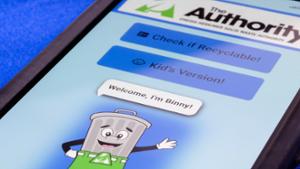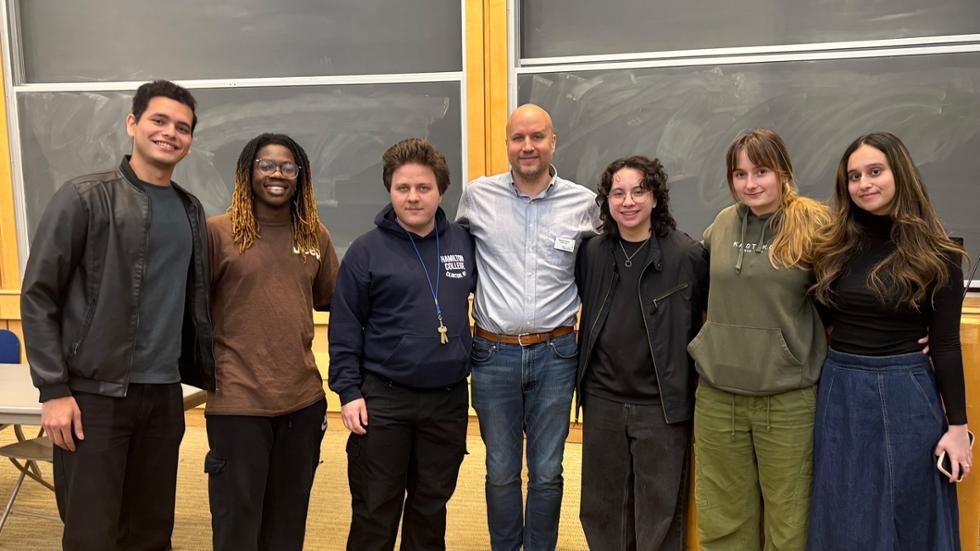
Organized by Soren Lera ’27, Ritchie Registre ’28, and Seth Moore ’27, the Hackathon invited participants to collaborate, build, and present original projects within a single day. Fourteen students, in five teams, each presented their completed projects to a panel of judges.
“We wanted to give students the chance to apply their theoretical learning in a hands-on project outside of class, and they would have a chance to build something cool,” Lera explained, adding that the idea stemmed from his and Moore’s participation in a similar event at Colgate University.
“We wanted to give students the chance to apply their theoretical learning in a hands-on project outside of class, and they would have a chance to build something cool.”
Throughout the event, participants attended workshops and an alumni panel, where Hamilton graduates working in technology sectors shared their personal insight into the industry. Judges included alumni, faculty, and staff, including representatives from the Career Center.
During this process, faculty played an advisory role. Associate Professor of Computer Science Darren Strash met regularly with organizers, offering guidance while ensuring students maintained ownership of the event. “I advised the organizers on a weekly basis … and connected them with resources on campus,” he said, noting that ultimately, he “insisted they make all final decisions.”
The event was as much about professional development as it was about innovation, with Registre acknowledging, “Our goal was to help prepare students for the tech world post-graduation. Working in groups allowed students to learn how to use version control like Github, which is industry standard.”
Moore explained that, as organizers, they were intentional about encouraging originality in participant’ projects without the use of AI, something that he worried was over-incorporated at Colgate’s hackathon. He said he “wanted to find a way to disincentivize such projects,” adding that Hamilton’s hackathon was incredibly successful in this and that “all five team submissions at the end of our hackathon were very creative and did not incorporate prompt engineering into their functionality.”
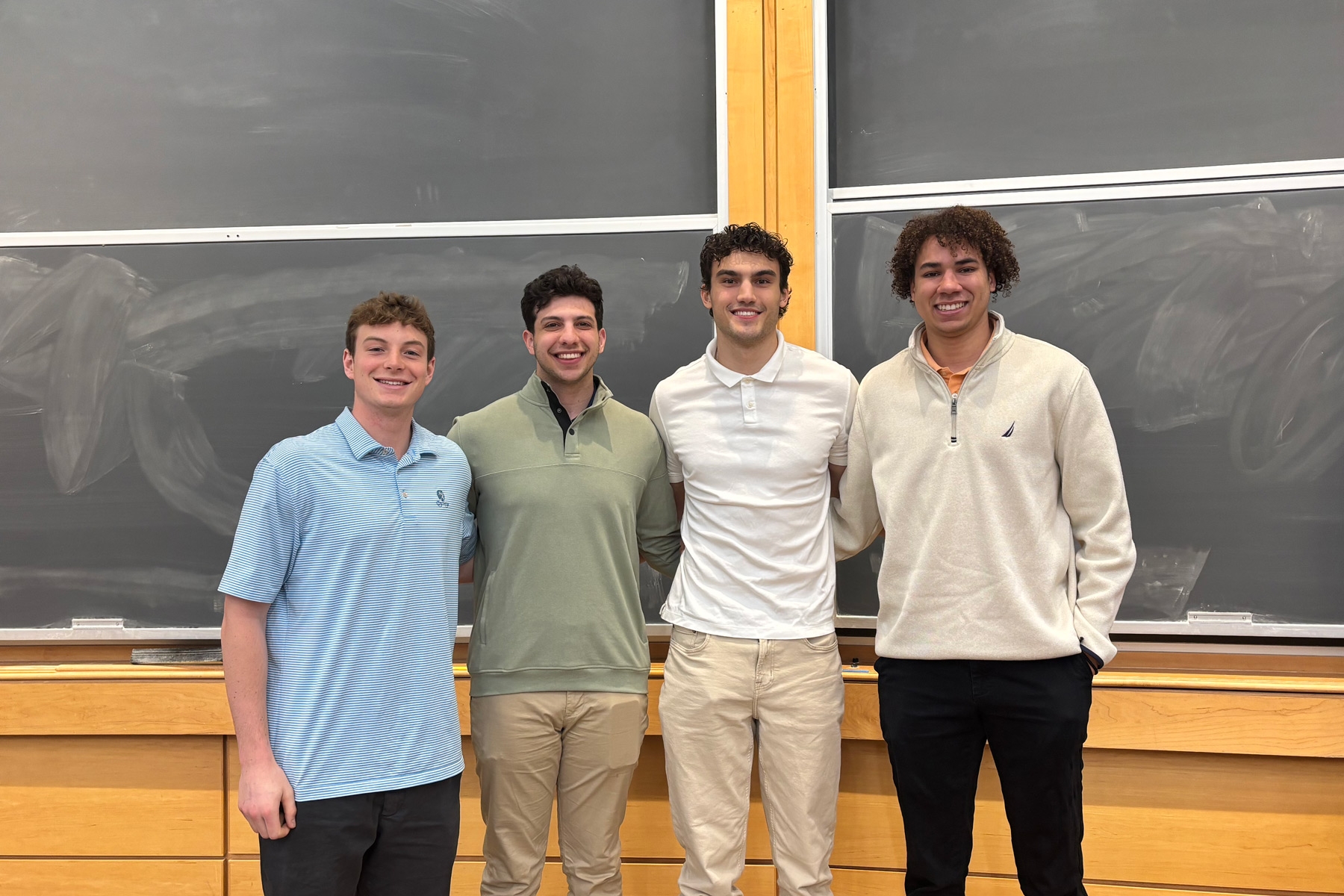
The winning team — Jalen Reese ’27, Garret Keyhani ’26, James Stowell ’27, and Max Freishtat ’26 — developed MoveOn, described by its creators as “a campus marketplace where everything is free.” The digital platform allows students to quickly post and claim items such as textbooks, appliances, or sports equipment that might otherwise be discarded.
“We have seen so much stuff that had more life but got thrown away,” said Keyhani. “Throwing something away is easier than finding a new home for it, and MoveOn aims to change that.”
The team designed the platform with institutional support in mind, envisioning partnerships with the College to incentivize participation. Proposed features include a points system that rewards users with perks such as dining credits or campus store discounts, hoping to encourage reuse through these motivation tactics as well as the convenience MoveOn provides.
“We wanted to figure out how a software project could help the environment in real ways.”
The team’s idea evolved during the Hackathon itself. Initially inspired by the event’s environmental theme, the team refined their concept after brainstorming practical ways that technology could be used to address everyday waste on campus. “We wanted to figure out how a software project could help the environment in real ways,” Keyhani said.
While the platform has not yet been implemented, the team hopes to partner with the College to explore opportunities for campus adoption in the future.
Beyond the projects themselves, organizers emphasized the broader impact of the event: fostering collaboration, creativity, and community among students with diverse interests and experience levels. “This was a great experience … to connect with likeminded peers and work to make something tangible happen,” Lera said.
The organizers plan to make the Hackathon an annual event and hope to expand participation in the future, potentially inviting students from other colleges and hosting it in Hamilton’s planned Innovation Center.
Posted May 5, 2026