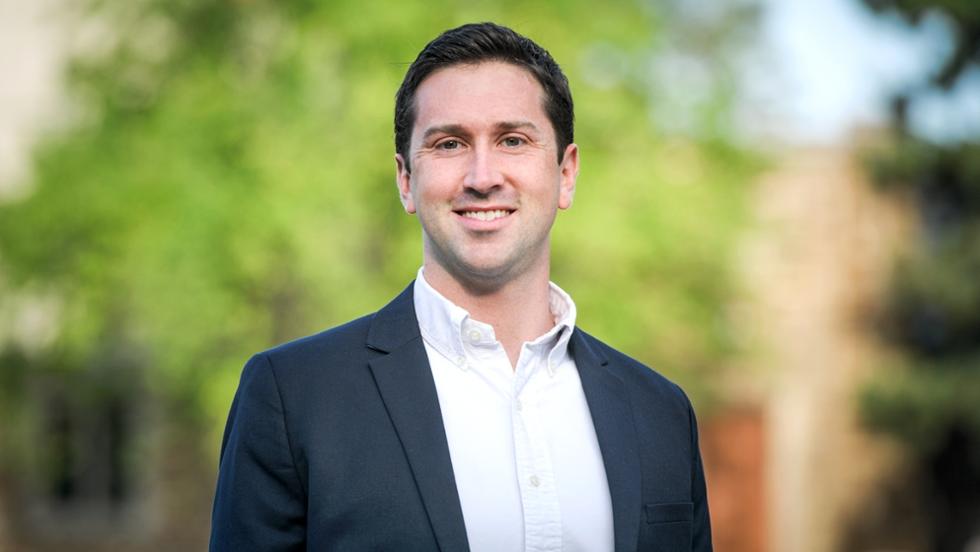
“Contrasting public and healthcare worker perspectives on the denial of medical care to trans people in the United States: It’s (mostly) about gender,” co-authored by Chair and Associate Professor of Sociology Matthew Grace, was recently published in the Elsevier journal Social Science & Medicine. Based on research conducted with Long Doan of the University of Maryland, the article investigates how healthcare providers view the denial of routine medical care to trans people relative to the general population.
Using a large-scale experiment, Grace and Doan found that “healthcare providers are significantly less likely to endorse the denial of care to trans people compared to the general public across experimental conditions.” They said that while this “finding is somewhat intuitive, the reason behind it is somewhat surprising: more than half of the difference in endorsement of treatment refusal can be attributed to the fact that the healthcare workforce is disproportionately female.
“Although women still comprise only one-third of practicing doctors, they make up about three-quarters of all healthcare workers,” they said, adding that “women are also a group that tends to be substantially more likely to support civil rights and discrimination protections for trans people.”
Grace and Doan analyzed narrative data provided by respondents, finding that women and men tend to deploy strikingly different logics in how they thought about a case, and that “women were far more likely to view a doctor’s decision to deny care to the patient as a form of discrimination and to attribute it to their underlying prejudice.” They noted that women “were also more likely than men to believe doctors have a professional and moral obligation to provide care to a patient regardless of the personal misgivings they might harbor.”
Posted July 6, 2026
